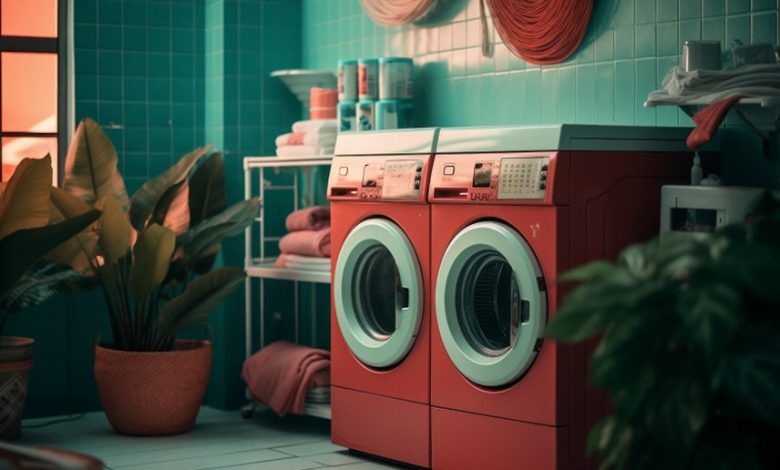
A washing machine’s price tag is just the opening number in a much longer calculation most people never actually finish. Installation, the extra water and electricity on the monthly utility bill, eventual repairs, and the machine’s own replacement cost down the line all quietly stack on top of that first figure, and very few households ever add them all up in one place.
What the Sticker Price Leaves Out
A mid-range washing machine’s purchase price is easy to compare against a laundromat’s per-load cost, and on that comparison alone, owning usually looks like the better deal. What that simple comparison misses is everything that comes after the purchase: the water and electricity each cycle draws, eventual servicing or parts, and the fact that the machine itself will need replacing again in ten to fifteen years.
Running the Numbers Side by Side
| Cost Factor | Owning at Home | Pay-Per-Load |
| Upfront cost | Full machine price paid at once | None |
| Water and electricity | Added to the household utility bill each cycle | Built into the per-load price |
| Repairs and maintenance | Owner’s responsibility and cost | Not the customer’s concern |
| Eventual replacement | Another full purchase down the line | Not applicable |
Where the Comparison Actually Tilts
For a household doing laundry only once or twice a week, self-service laundry on a pay-per-load basis can end up costing less over time than it first appears, once the hidden costs of ownership are factored in properly. The break-even point shifts considerably depending on household size and how often laundry actually gets done, which is exactly why a flat “owning is always cheaper” assumption doesn’t hold up universally.
What Changes the Math for a Bigger Household
A larger household doing laundry daily or near-daily tilts the calculation back toward ownership being the more economical option over several years, simply because the fixed costs of owning a machine get spread across far more loads. Frequency of use, more than anything else, is what actually determines which option wins out financially for a given household.
What Gets Left Out of a Pure Cost Comparison
- Space: a washing machine takes up permanent space in a home that a laundromat visit doesn’t require.
- Time: a trip to a laundromat takes a dedicated outing, while a home machine runs in the background of a normal day.
- Flexibility: moving homes, especially rentals, is simpler without a washing machine to move along with everything else.
Why This Isn’t Really an Either-Or Decision for Most People
A lot of households end up using both in practice: a home machine for everyday basics and an occasional laundromat visit for bulkier items like duvets and large loads that a standard home washer struggles to handle well. Treating it as a strict either-or question misses how most people’s actual laundry habits work.
What’s Worth Actually Tracking Before Deciding
Rather than guessing, tracking actual laundry frequency and rough per-load costs for a month or two gives a far more accurate picture than any generic rule of thumb could. What works out cheaper for a given household depends entirely on its own specific laundry habits, not a one-size-fits-all average.
Why the First Year of Ownership Skews the Picture
A brand-new washing machine rarely needs a service call in its first year, which makes early ownership look deceptively cheap compared to paying per load the whole time. The real cost of ownership only becomes visible several years in, once a first repair bill, a part replacement, or a noticeably higher water bill during a particularly heavy laundry month starts showing up. Judging the two options purely on a new machine’s first year understates what ownership actually costs over its full lifespan.
A Practical Way to Think About the Decision
Rather than trying to settle this with one definitive number, it helps to think of ownership and pay-per-load as sitting on a sliding scale rather than a strict choice. A household doing one small load a week sits clearly on the pay-per-load side of that scale, while a family running a machine daily sits clearly on the ownership side, and plenty of households fall somewhere in between where either option works out reasonably close to the other.
What Happens If Circumstances Change
Ownership also carries a kind of inflexibility that a pay-per-load option doesn’t: a household that downsizes, moves overseas, or simply does less laundry than before is still stuck with a machine it already paid for, while someone using a pay-per-load service can scale usage up or down without carrying any sunk cost either way. That flexibility is worth weighing alongside the raw numbers, particularly for anyone whose living situation might change in the next few years.
Curious what your own numbers would actually look like? Contact Fresh Laundry to find out what a regular visit would realistically cost you.