Travertine pavers are one of the most popular choices for outdoor spaces thanks to their natural beauty, durability and timeless appeal. Whether used around pools, patios, pathways or alfresco areas, travertine delivers a luxurious, high-end finish that instantly elevates any landscape. However, like all natural stones, it requires proper care to maintain its appearance and protect it from stains, weathering and general wear.
Cleaning and sealing travertine pavers doesn’t have to be complicated—especially when you understand the correct methods and products to use. This guide walks you through exactly how to clean, maintain and seal your travertine pavers Perth so they stay looking their best for years to come.
Why Travertine Needs Proper Cleaning and Sealing
Travertine is a naturally porous stone. While this is part of what gives it its stunning texture and unique appearance, it also means:
- Liquids can soak into the surface
- Stains can occur more easily
- Dirt can lodge into pores
- Colours can fade over time
- Seawater and pool chemicals may affect the stone
Sealing helps protect against all these issues, while regular cleaning keeps your outdoor space looking fresh and well-maintained.
Common Factors That Dirty Travertine Pavers
Before starting the cleaning process, it helps to understand the typical causes of stains and discolouration on travertine:
- Dirt and debris from foot traffic
- Pool water with chlorine or salt
- Leaf litter and organic staining
- BBQ grease or oil
- Mould, mildew and algae growth
- Hard water marks
- General weather exposure
Identifying the source of the dirt helps you choose the right approach when cleaning.
What You Need for Cleaning Travertine Pavers
Cleaning travertine requires gentle, stone-safe products. Always avoid acidic or abrasive cleaners, as they can etch or damage the stone.
Recommended supplies:
- A soft-bristle broom
- pH-neutral stone cleaner
- Bucket of warm water
- Pressure washer (optional, on low setting)
- Microfibre mop
- Soft scrubbing brush
- Towels for drying large spills
Products to avoid:
- Vinegar
- Bleach
- Citrus-based cleaners
- Harsh degreasers
- Abrasive scrubbers
Travertine reacts badly to acid, so stay clear of anything that could cause etching or dulling.
Step-by-Step Guide: How to Clean Travertine Pavers
Below is a simple, safe, and effective method for cleaning your travertine pavers.
1. Sweep the Area Thoroughly
Begin by sweeping away leaves, dirt, dust and loose debris. This prevents particles from scratching the surface during the cleaning process.
2. Rinse the Pavers with Clean Water
Use a hose to gently rinse the area. This helps soften any dirt stuck in pores or grout lines.
3. Apply a pH-Neutral Cleaner
Mix your pH-neutral stone cleaner with warm water according to the instructions. Avoid overusing detergent—more product doesn’t mean better results.
4. Scrub Gently
Using a soft brush, scrub any problem areas such as stains, algae spots or dirt patches. Take your time and avoid harsh pressure.
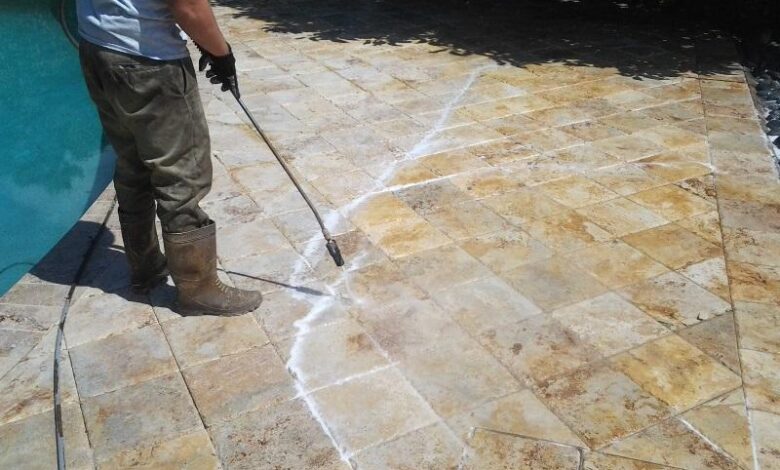
5. Optional: Use a Pressure Washer
If your pavers are very dirty, you can use a pressure washer on a low to medium setting.
Important:
- Keep the nozzle at a safe distance
- Avoid strong, direct blasts
- Move in smooth sweeping motions
Pressure washing incorrectly can damage the stone, so be cautious.
6. Rinse Thoroughly
Rinse away all soap, dirt and residue. Any leftover cleaner may leave streaks or attract more dirt later.
7. Allow the Pavers to Dry
Let your travertine pavers dry for at least 24 hours before applying any sealer. The stone must be completely dry to ensure proper bonding.
When to Seal Travertine Pavers
Sealing is recommended every 1–3 years depending on:
- Location (pool areas need more frequent sealing)
- Weather exposure
- Foot traffic
- Type of sealer previously used
New travertine pavers should always be sealed shortly after installation to protect the stone from moisture and staining.
Types of Travertine Sealers
Choosing the right sealer is essential for both protection and appearance.
1. Penetrating (Impregnating) Sealers
These absorb into the stone and protect from within.
Best for:
- Pool areas
- Driveways
- High-traffic zones
Benefits:
- Doesn’t change the stone’s natural look
- Allows the stone to breathe
- Long-lasting durability
2. Topical Sealers
These sit on the surface, creating a protective barrier.
Best for:
- Alfresco areas
- Entertaining spaces
Benefits:
- Can enhance colours
- Adds a satin or glossy finish
- Provides good stain resistance
3. Enhancing Sealers
These deepen the natural tones and bring out the stone’s richness.
Best for:
- Homeowners wanting a “wet look”
- Highlighting variation in travertine
How to Seal Travertine Pavers
Once your pavers are completely dry, follow these steps.
1. Choose a Dry, Warm Day
Avoid sealing in wet or extremely hot weather. Ideal temperature is between 15°C and 30°C.
2. Apply the First Coat
Use a roller, sprayer or microfibre applicator. Spread the sealer evenly and avoid puddling.
3. Allow Proper Drying Time
Each sealer type has its own drying requirements—typically between 30 minutes and 4 hours.
4. Apply a Second Coat (If Required)
Most penetrating and enhancing sealers need two coats. Topical sealers may require two to three for best results.
5. Allow Full Cure Time
Even though your pavers may feel dry, sealers take between 24 and 48 hours to fully cure. Avoid heavy foot traffic or water exposure during this time.
How Often Should You Clean Travertine Pavers?
A simple cleaning schedule will help keep your pavers looking fresh:
- Sweep weekly
- Rinse monthly
- Deep clean every 3–6 months
- Reseal every 1–3 years
Areas exposed to saltwater, chlorine or heavy use may need more frequent attention.
Tips to Keep Travertine Pavers Looking Their Best
- Clean spills straight away
- Use mats near BBQ areas
- Avoid dragging furniture
- Reseal regularly
- Remove weeds and moss promptly
- Don’t use acidic cleaners
Proper care protects your investment and extends the lifespan of your stone.
Benefits of Cleaning and Sealing Travertine
With the right maintenance routine, travertine pavers offer many long-term benefits:
- Enhanced natural beauty
- Protection from staining and etching
- Reduced water absorption
- Improved slip resistance
- Greater durability
- Easier ongoing cleaning
- Longer lifespan
Travertine is a premium natural stone, so maintaining it ensures you preserve its elegance and value.
Final Thoughts
Learning how to clean and seal travertine pavers properly is key to keeping your outdoor areas looking stunning year-round. With gentle cleaning, the right products and regular sealing, you can protect your investment and enjoy the timeless beauty of travertine for decades. Whether your pavers are around a pool, patio or garden area, following these steps will keep them looking their best through every season.
If you’d like, I can also tailor this blog to a specific paving supplier or include product recommendations—just let me know!