

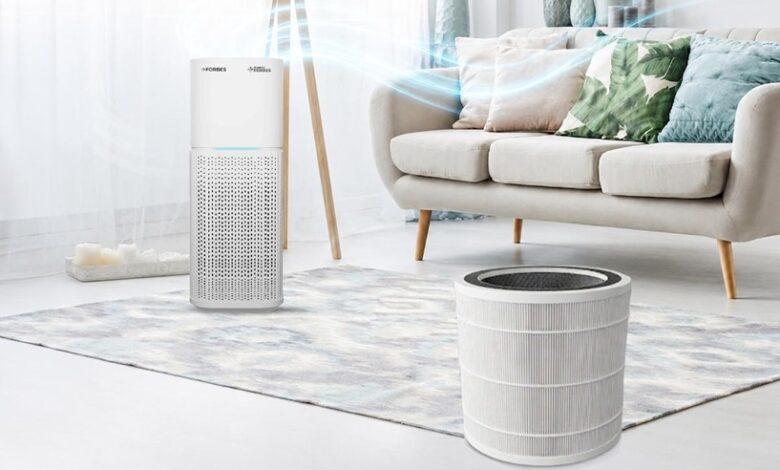
Most people buy an air purifier and then forget it exists. The unit runs on schedule, the room smells fine, and life moves on. But the purifier’s filter has a fixed capacity. Once it reaches that limit, the machine keeps on running while the cleaning largely stops.
Indoor air often contains a wide range of pollutants that go beyond ordinary dust. Pollen, pet dander, particulate matter (PM 2.5) from cooking smoke, and volatile organic compounds from household products are commonly found in most households.
A purifier filter should be in good condition to consistently capture these dust particles. However, once its lifespan is exceeded, that capacity is largely lost. Regular replacement ensures air purification continues to deliver real results rather than just an appearance of results.
Understanding the Role of Filters in Your Air Purifier
Air that is entering does not clean itself in one go. Instead, it goes through several phases or levels of cleaning, and each level has its own purpose.
- The pre-filtration phase: It is the initial cleaning process of removing larger debris items in the home, for example, pet hair, lint etc.
- Activated Carbon Phase: Removes odours and smells from inside your home caused by cigarette smoking or candle burning and also removes volatile organic compounds (VOCs) released into the atmosphere from cooking and other appliances.
- True HEPA Filter Phase: Removes microscopic dust particles that are commonly known as Particulate Matter (PM2.5 & PM10).
- Plasma Filtration Technology Phase: Works with the filtration system to provide another method of purifying the air.
Over time, these filters get clogged with airborne particles that get stuck in them. This causes restricted airflow and a decrease in the efficiency of filtration. That is why it is advisable to wash or replace the filters of your air purifier on time.
Common Signs That Indicate Your Purifier Filter May Need Replacement
Given below are common signs that may indicate your purifier filter needs replacement:
- Filter change indicator light: A filter change indicator light turns on when the filter reaches its limit. Do not overlook or reset the warning. Instead, replace the filter.
- Reduced outlet airflow: If the outlet airflow is noticeably reduced, the filter is probably saturated.
- Smells that remain in the room: Cooking odours or mustiness that used to clear quickly mean that the activated carbon layer is exhausted. Ideally, it should be changed every 6-12 months (approx).
- Air purifier running louder than usual: A clogged filter forces the purifier’s fan to work harder to pull air through, which can result in increased operating noise or unusual sounds during operation.
- Worsening allergy or respiratory symptoms: If allergy symptoms are worsening despite the purifier running, then the HEPA filter may be clogged and not capturing fine particles. Usually, it is better to replace the HEPA filter every 9-12 months.
- Takes longer to clear the air: If the room stays musty for longer periods of time or the purifier takes a lot more time to clear out smoke, pet dander, or airborne pollutants, then the efficiency of the filter may have decreased, and it may be time to replace it.
- Grey or discoloured filter: Heavy discolouration usually means the filter needs to be replaced. A filter covered in dust, dirt or dark patches is no longer able to effectively trap pollutants, reducing the overall effectiveness of the air purifier.
Conclusion
The purifier on your wall is only doing its job if the purifier filter inside is still capable of doing its job. Weak airflow, smells that won’t clear, returning allergy symptoms, and a lit-up indicator- each one is worth taking seriously. Don’t wait for all four to appear together. One reason is enough to check. Replacing the filter on time can lead to improvement in airflow, filtration efficiency and overall performance of your air purifier. Best brand’s filters are designed for each specific model, ensuring consistent performance after every change.


