The appeal of industrial design lies in its honest, unpretentious celebration of functional engineering and utilitarian materials. Originating from the adaptive reuse of late-nineteenth and early-twentieth-century manufacturing facilities, iron foundries, and dockside warehouses, the style was born out of raw necessity rather than high-concept fashion. When urban dwellers first began converting empty industrial lofts into residential dwellings, they did not hide the exposed ductwork, brickwork, or cast-iron beams. Instead, they furnished these expansive open footprints with heavy-duty drafting tables, steel shelving units, and salvaged factory workbenches.
In modern interior architecture, purely industrial spaces can sometimes feel cold, monolithic, or overly cavernous. The solution has emerged in the thoughtful union of classic industrial grit and sleek contemporary minimalism. By pairing the rough-hewn durability of industrial furniture with the clean geometry, intentional negative space, and refined comforts of contemporary design, homeowners achieve an atmosphere that feels grounded, warm, and sophisticated.
Core Materials Defining the Industrial Aesthetic
Industrial furniture relies on a distinct tactile language. Unlike contemporary mass-market pieces that rely on veneers and hollow composites, authentic industrial furnishings celebrate the substantial, imperfect weight of raw structural substances.
Salvaged and Weathered Timbers
Wood used in industrial styling carries clear evidence of its previous life. It is never artificially glossy or completely planar.
-
Reclaimed Barn Wood and Old-Growth Pine: Sourced from demolished warehouses, bridges, and agricultural buildings, these timbers feature original saw marks, nail holes, deep checking, and natural oxidation that cannot be replicated through artificial distressing.
-
Live-Edge Slabs: Solid wood dining and console tables that retain the natural perimeter contour of the tree trunk create a rugged contrast against sharp architectural lines.
-
Wire-Brushed Finishes: Wire brushing removes the soft pulp of the wood grain, creating a pronounced tactile ridge that diffuses glare and celebrates natural organic texture.
Raw and Patinated Ferrous Metals
Metalwork forms the structural spine of every industrial piece, serving as visible evidence of industrial manufacturing methods.
-
Hot-Rolled Black Steel: Known for its deep slate-gray finish and distinctive mill scale, raw black steel provides strong, clean lines for table trestles, bookshelves, and bed frames.
-
Cast Iron Components: Heavy, poured-iron pedestal bases, counterweight pulleys, crank mechanisms, and oversized spoked casters ground a room with undeniable presence.
-
Hand-Applied Patinas: Chemical darkening agents, gunmetal bluing, and controlled rust stabilization prevent metal surfaces from looking like sterile, powder-coated factory components.
Full-Grain Saddle Leather
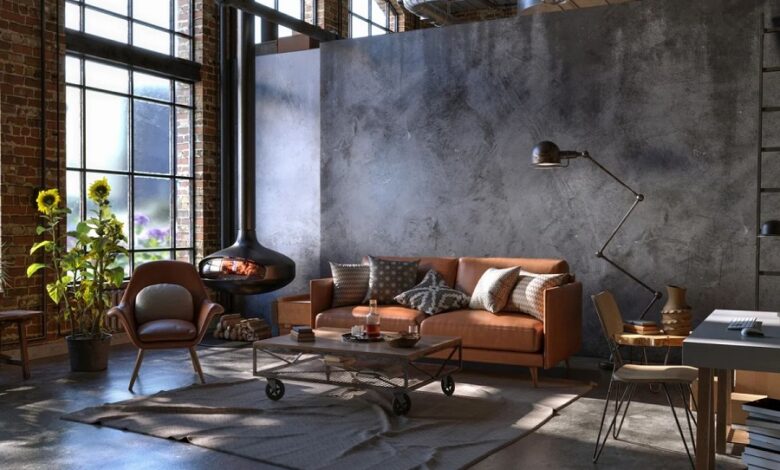
Upholstery in an industrial environment must hold up against raw metal and coarse timber. Top-grain and full-grain aniline leathers in shades of caramel, saddle tan, cigar brown, and charcoal develop a soft patina with regular contact. Every natural crease, surface scuff, and pull-up tone variation enhances the character of the seating, moving away from the plasticized feel of corrected leather.
Harmonizing Industrial Furnishings with Contemporary Frameworks
Bridging the gap between historic factory ruggedness and contemporary refinement requires deliberate balance. Filling an entire room exclusively with riveted iron and coarse timber can make a home feel like a vintage machine shop. Contemporary interiors succeed when industrial furniture is deployed as an intentional focal element framed by modern finishes.
The Power of Structural Contrast
Pairing opposing design philosophies elevates both components:
-
Sleek Plaster and Raw Timber: Mounting a thick, raw-edge reclaimed wood credenza against a smooth, hand-troweled Venetian plaster or matte drywall background highlights the rough grain of the wood while preventing the wall from appearing flat.
-
Precision Metal Meets Plush Textiles: Counterbalance the angular severity of a raw steel dining table base by surrounding it with contemporary dining chairs upholstered in rich bouclé, soft wool flannel, or tailored velvet.
-
Crisp Lighting with Weathered Surfaces: Placing an architectural, minimalist LED task lamp over a salvaged factory drafting desk bridges past craftsmanship with forward-looking design.
Maintaining Spatial Flow and Negative Space
One of the defining tenets of contemporary interiors is the commitment to breathing room. Avoid cluttering open rooms with an excess of heavy metal furniture:
-
Floating Profiles: Select industrial furniture that incorporates open steel tube frameworks rather than solid block cabinetry. Open credenzas and open-back shelving units permit sightlines to pass straight through, preserving spatial volume.
-
Low-Profile Centerpieces: In open-concept living rooms, choose low-slung, industrial-framed sofas that do not bisect sightlines between the kitchen, dining, and seating areas.
-
Focused Placement: Allow a single exceptional industrial piece, such as a salvaged zinc-top island or a riveted steel coffee table, to function as the undisputed anchor, choosing quieter contemporary companions around it.
Signature Furniture Archetypes for Modern Living
Certain foundational furniture typologies bring industrial soul into residential layouts without compromising day-to-day comfort.
The Factory Cart Coffee Table
Salvaged rail carts, factory transport dollies, and foundry flatbeds make natural living room centerpieces. Featuring heavy cast-iron wheels, reinforced corner brackets, and thick tongue-and-groove plank tops, these low-lying tables ground contemporary seating groupings. When paired with a streamlined, deep-seated sectional, a factory cart adds rich history to the center of the room.
Architectural Pipe and Metal-Frame Bookcases
Storage in an industrial-contemporary home serves as both architecture and utility. Tall, open-format shelving units built from structural iron pipes, steel angles, and solid hardwood boards can line an entire perimeter wall or act as a functional room divider within an expansive loft. When styling these units, avoid packing shelves with uniform clutter; mix art monographs, minimalist ceramics, and metal objects with generous negative space.
Crank-Adjustable and Trestle Dining Tables
Few pieces make as strong a visual statement as an adjustable communal table modeled after drafting tables or machinery workbenches. Heavy cast-iron bases with functional hand cranks allow users to raise and lower the surface between dining, bar, and standing desk heights. The visible, working gears introduce mechanical intrigue that serves as a permanent conversation starter during gatherings.
Riveted Aviator Desks and Consoles
Drawing inspiration from early aviation engineering, aviator-style furniture features wrapped aluminum sheeting attached to aerodynamic wooden frames using exposed, rows of counter-sunk rivets. A polished or matte aluminum desk brings a striking metallic centerpiece into a home office, catching light and playing off the neutral, cool gray tones common in modern architectural schemes.
Styling and Softening Industrial Spaces
The secret to living comfortably with industrial furniture is softening its hard edges through intentional decor choices, ambient lighting, and organic materials.
-
Soft Floor Layers: Layering thick, plush high-pile Moroccan wool rugs, natural sheared sheepskins, or flat-weave kilims over polished concrete or wide-plank floors buffers acoustics and provides warm underfoot comfort against cold materials.
-
Warm Temperature Illumination: Never use cold daylight bulbs around steel and reclaimed timber. Calibrate all residential lighting to a warm 2700K temperature, using warm-tinted Edison filaments or diffused indirect LED runs to highlight metal patinas and wood grains.
-
Large Organic Botanicals: The rigid, machine-cut profiles of iron and steel benefit from the soft curves of nature. Incorporate tall, sculptural indoor trees like fiddle-leaf figs, olive trees, or wide-leaf monstera planted in simple, raw terracotta or concrete vessels.
The union of industrial furniture and contemporary interior architecture creates a balanced home that honors functional craftsmanship while embracing clean, modern living. By pairing substantial raw timbers, hand-patinated steels, and supple leathers with open floor plans and refined finishes, you build a space that feels grounded, functional, and enduring.
Frequently Asked Questions
How can you determine whether an industrial piece is authentic salvage or a reproduction?
Authentic salvage exhibits organic, uneven patterns of wear that cannot be produced in a modern factory. Look closely at the hardware; authentic pieces feature square nuts, slotted screws rather than modern Phillips-head screws, and irregular hand-stamped foundry marks or inventory stencils. The patina on real vintage metal develops variations across high-touch areas, whereas modern reproductions often have uniform sprayed-on coatings and artificially repeated distressed paint splatters.
What is the proper method for sealing and cleaning reclaimed wood furniture?
To preserve the authentic matte finish of reclaimed timber without darkening the wood excessively, apply a high-grade natural hard-wax oil or a dead-flat water-based polyurethane sealer. Avoid thick, glossy varnishes that create an artificial, plastic barrier over the tactile grain. For day-to-day cleaning, wipe surfaces down with a soft, dry microfiber cloth or a slightly damp cloth dipped in pH-neutral water, avoiding chemical polish sprays that leave sticky silicone residues.
Can industrial furniture work well in small urban apartments without feeling heavy?
Yes, provided you choose pieces with slender visual silhouettes. Instead of selecting massive, blocky wooden chests, opt for pieces with thin square-tube black metal frameworks and elevated legs that reveal the floor beneath them. Wall-mounted pipe shelving and glass-top tables featuring architectural metal bases keep light flowing through the room, making a compact apartment feel open rather than boxed in.
How do you prevent raw metal furniture from developing rust in high-humidity homes?
Bare iron and raw steel naturally oxidize when exposed to air and moisture. To prevent rust without changing the underlying hue of the steel, apply a thin coat of clear microcrystalline wax or paste wax once or twice a year using a soft cotton rag, buffing it out after application. In bathrooms or humid coastal regions, choose metal furniture finished with a clear matte industrial lacquer or marine-grade sealant.
What wall colors work best alongside dark metal and aged wood furnishings?
Muted, neutral wall tones provide the best backdrop for the strong silhouettes of industrial furniture. Warm off-whites, greiges, deep charcoal, muted olive green, and soft slate gray complement the dark undertones of steel and iron without competing with them. Avoid bright, saturated primary wall colors, which can visually clash with the earthy tones of reclaimed woods and worn leathers.
How do you protect hardwood and tile flooring from heavy industrial casters and iron legs?
Original cast-iron wheels, heavy metal casters, and bare iron table legs will scratch, dent, or crack residential hardwood and ceramic tile under normal weight. To prevent surface gouging, apply heavy-duty adhesive felt floor protectors to the bottom of all metal feet, replace original hard-iron wheels with hidden polyurethane casters, or place heavy industrial items over dense wool area rugs backed with non-slip felt pads.