

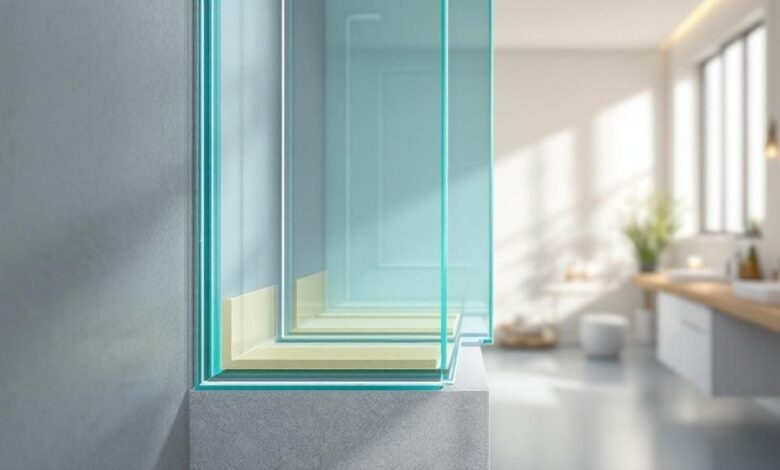
Does a fraction of an inch really make a difference in your custom glass shower door? Yes, it does—if you’re planning a custom glass shower!
Frameless shower enclosures usually use either 3/8 inch or 1/2 inch thick tempered glass. That choice will affect both the look and performance of your shower.
Below, we’ll explore why that fraction of an inch matters. We’ll cover the differences between these two thicknesses to help you create a bathroom that is both beautiful and safe.
Why Glass Thickness Matters for Shower Doors
Shower glass needs to be thick enough to be sturdy, yet not so heavy that it puts an unnecessary strain on your walls and hardware
In older framed shower doors, thin glass (like 1/4″) relied on a metal frame for support. In modern frameless designs, the glass itself must provide structural integrity.
Anything thinner than 3/8″ for a frameless door will likely flex and wobble dangerously, so 3/8″ is generally the minimum for safety and stability.
On the other hand, 1/2-inch glass can provide additional rigidity, but it is much heavier.
All that additional weight will put added stress on door hinges and mounting brackets, so thicker isn’t always better in all applications.
3/8″ vs. 1/2″: Comparing Shower Glass Thickness
3/8-inch Glass (approx. 10 mm)
This is the most common thickness for frameless shower doors. A 3/8″ glass panel is sturdy enough to stand on its own without a frame. Most frameless showers use 3/8″ glass. It gives you the stability you need while also keeping the door lighter and more affordable.
1/2-inch Glass (approx. 12 mm)
This thicker glass is the premium option.
At first glance, it doesn’t look that different from 3/8″, but when you open the door and see the edge of the glass, you’ll notice the heft.
A panel of glass 1/2″ thick is stronger and has a more luxurious feel. It’s generally used in large or high-end custom showers where bigger glass panels are involved.
Being about 33% thicker-and thus heavier-than 3/8″, it feels more substantial and ultra-sturdy. Most often, homeowners will choose 1/2″ glass for that upscale “heavy glass” feeling and peace of mind about stability.
Keep in mind, it will cost more and weigh more, which has other implications we’ll discuss.
Weight and Hardware Considerations
One of the biggest differences between 3/8″ and 1/2″ glass is weight. That extra thickness makes the glass substantially heavier, roughly 25-30% more weight per panel.
A larger, thicker door can easily weigh well over 100 pounds. This added weight means you need to consider your hardware and supports carefully.
Standard hinges and brackets for frameless showers are typically rated for the weight of 3/8″ glass panels. If you upgrade to 1/2″, you’ll likely need heavy-duty hinges and mounting hardware designed for the increased load.
The structure of your bathroom must also support the weight.
Before you make your decision, chat with a professional to determine whether your walls (especially if they’re tiled over drywall) can bear the load.
If the heavy glass isn’t properly supported, the hardware could fail or the tiles could crack when the anchors give way.
For swinging shower doors, weight is even more important.
A door that’s opened and closed daily puts stress on its hinges. Choosing a slightly lighter 3/8″ glass for the door panel can reduce wear and tear on the hinges and ensure smoother operation.
If you do opt for 1/2″ glass on a door, expect to install top-quality pivot hinges (or multiple hinges) that can handle it.
Stability and Safety
Both 3/8″ and 1/2″ shower glass are tempered safety glass—they’re engineered to not shatter into dangerous shards if broken.
Tempered glass is required by building codes for bathroom enclosures, so either thickness will keep your family safe (they’ll crumble into small pebble-like pieces upon impact).
In terms of safety, one thickness isn’t inherently “safer” than the other because of this tempering.
However, thickness does play a role in the feel of stability.
Naturally, a thicker panel won’t flex as much. On a large glass panel (say a tall door or a broad fixed wall), 3/8″ glass can have a bit of give or vibration if you push on it, whereas 1/2″ glass, being more rigid, reduces that flex.
For very wide or very tall glass installations, many professionals recommend the 1/2″ thickness to avoid any noticeable wobble or “bowing” in the glass.
That said, for most everyday-sized showers, 3/8″ glass is perfectly sturdy and safe. It’s thick enough to feel firm when properly installed.
The extra stability of 1/2″ becomes important mostly in large custom showers; for example, if you have an oversized door or an open-span panel that’s 6 or 7 feet tall.
Aesthetics and Feel
Thicker glass has more presence when viewed from the side. A 1/2″ glass door shows a deeper edge and sometimes a greener tint (in standard clear glass) compared to 3/8″ door.
From the front, most people can’t tell the difference. The clarity and open look stay the same either way.
What’s more noticeable is the feel.
A 1/2″ door has a heavier swing and a more solid impression. Some people prefer that weight because it feels upscale. A 3/8″ door is lighter and easier to use, but still feels sturdy.
If you’re using low-iron glass, the edge difference is even less visible.
For most, these details are minor. Both thicknesses create a modern, frameless look.
Choosing 1/2″ often comes down to wanting the thickest option available, while 3/8″ already looks and feels premium in most bathrooms.
Cost Factors
Understandably, cost is often the deciding factor when choosing glass thickness.
Thicker glass is simply more expensive, both in material and the labor to manufacture and install it. A sheet of 1/2″ tempered glass requires more raw material and takes longer to cut, polish, and temper.
It’s also heavier to move around, and one might need extra hands or special equipment to install it.
All of that adds to the price.
You can generally expect a pronounced upcharge for 1/2″ glass. The exact amount will depend on your project, but thicker glass might increase the cost by a considerable percentage.
Beyond the glass itself, hardware costs can increase if special heavy-duty hinges or extra supports for the thicker panels are needed.
That being said, those hardware upgrades usually account for a smaller percentage of the budget than the glass itself.
Choosing the Right Thickness for Your Glass Shower Door
To help you decide between 3/8″ and 1/2″ glass, focus on these fundamental factors:
- Shower Design and Size: Most standard frameless showers work well with 3/8-inch glass. It offers enough stability and keeps costs down. If your design is very large or tall, 1/2-inch glass may give better rigidity.
- Hardware and Support: Heavier glass needs stronger support. If your walls are reinforced and you’re using heavy-duty hinges, 1/2-inch glass is an option. If you’re unsure about wall strength or anchoring, 3/8-inch is safer and easier to work with.
- Budget: 1/2-inch glass costs more in both materials and installation. 3/8-inch gives a high-end look for less. If you’re balancing costs, using 3/8-inch could leave room for upgrades elsewhere.
- Personal Preference: Want a heavier feel and the thickest option? 1/2-inch delivers exactly that. If you’re happy with something lighter that still feels sturdy, 3/8-inch will work.
Making Your Choice
Ultimately, there is no right or wrong answer for your shower glass. If you’re in doubt, consult with an experienced glass installer who can consider your space and advise you accordingly.
Professionals at Coastal Closets and Showers in Stuart, FL., will walk you through the options and assist you in landing the right choice.


