Have you ever been caught in a sudden storm or a power outage and wished you had a superhero to save the day? Well, meet your emergency response superheroes: air compressors and generators. They might not wear capes, but they’re silently working behind the scenes when disaster strikes, ensuring things don’t go completely haywire.
In this blog, we will talk about these unsung heroes and how they play a crucial role in helping us bounce back from emergencies. Imagine them as the Batman and Robin of tough times, swooping in to lend a helping hand when things seem a bit too dark. So, let’s dive into the world of Compressors for air tools and generators and discover why they’re like your emergency response sidekicks, ready to power up and pump air when you need it most.
When disaster strikes, air compressors become the unsung heroes that breathe life into emergency response efforts. Here’s how they step up to the plate:
- Powering Pneumatic Tools: In the aftermath of a disaster, debris often needs to be cleared, structures that require repair, and urgent tasks that demand quick solutions. Air compressors supply the power for pneumatic tools like jackhammers, nail guns, and drills. This means rescue and recovery teams can efficiently carry out essential tasks without delay.
- Medical Support: Air compressors are integral to medical facilities during emergencies. They drive life-saving ventilators, ensuring patients in critical condition receive the necessary respiratory support. This becomes especially crucial when power outages are common, as air compressors can operate independently with portable power sources.
- Inflating Emergency Equipment: Properly inflated emergency equipment, from inflatable shelters to lifeboats, is vital. Air compressors come to the rescue by swiftly inflating these life-saving devices, ensuring they are ready for deployment immediately.
- Underwater Operations: In floods or submerged structures, rescue operations may require underwater tools. Divers rely on air compressors to fill their tanks, allowing them to conduct search and rescue missions or assess damage beneath the water’s surface.
Generators: The Powerhouse of Resilience
While air compressors focus on breathing, click here to know how they provide the heartbeat of emergency response efforts. Here’s how generators play a pivotal role:
- Keeping the Lights On: Generators kick in when the power grid fails to illuminate critical facilities. Hospitals, emergency shelters, and command centers need a constant power supply, and generators maintain essential lighting.
- Powering Communication Systems: In times of crisis, communication is key. Generators ensure that radio systems, emergency hotlines, and communication hubs remain operational, enabling coordination among response teams and providing crucial information to the public.
- Preserving Medications: Many medications, especially those used in critical care situations, require refrigeration. Generators step into power medical refrigerators, preserving medications and vaccines crucial for treating injuries and preventing the spread of diseases.
- Fueling Emergency Vehicles: Ambulances, fire trucks, and other emergency vehicles rely on generators for fueling stations. Generators ensure these vehicles are ready to roll, allowing first responders to reach affected areas swiftly and efficiently.
In the face of adversity, air compressors and generators form a formidable duo, addressing immediate needs and sustaining the infrastructure that makes effective emergency response possible. Together, they embody the resilience needed to weather any storm and bring relief when needed.
Let’s delve into the details of air compressors for air tools, covering the basic operation, types of air compressors, and the importance of pressure and CFM:
Basic Operation: How Air Compressors Power Air Tools
- Air Intake: Air compressors begin by drawing in air from the surrounding environment. This air is typically filtered to remove impurities like dust and moisture, ensuring a clean supply for the tools.
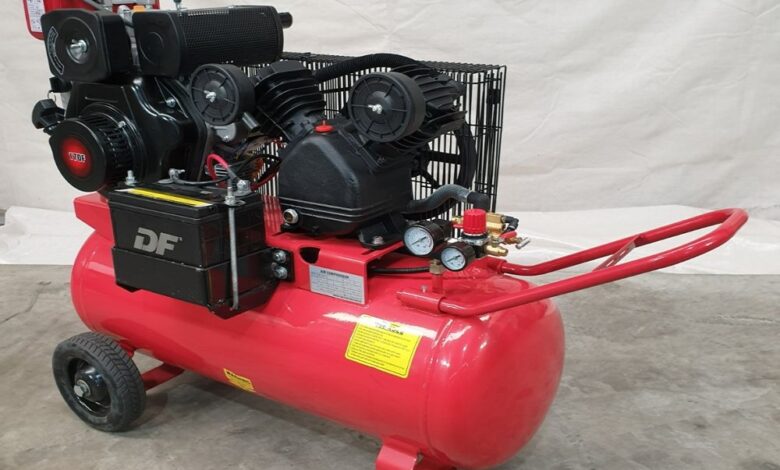
- Compression: Once the air is drawn in, the compressor’s mechanism, whether piston-driven (reciprocating) or rotary screw, compresses the air. Compression raises the pressure, turning the air into a potent energy source.
- Storage: The compressed air is then stored in a tank, creating a reservoir of pressurized air readily available for immediate use. This storage feature allows the compressor to provide a consistent and reliable power source for air tools.
- Release and Regulation: When a pneumatic tool is activated, the compressed air is released through a hose. Regulators and pressure gauges help control and adjust the pressure according to the specific requirements of the air tool in use.
Types of Air Compressors: Tailoring to Different Needs
- Reciprocating Compressors:
- Mechanism: These compressors use a piston-cylinder arrangement. The piston moves up and down, creating a vacuum to draw in air and then compressing it.
- Applications: Ideal for intermittent use and smaller-scale operations, such as home workshops and DIY projects.
- Rotary Screw Compressors:
- Mechanism: They use rotating screws to compress air continuously. This provides a more constant and smoother airflow compared to reciprocating compressors.
- Applications: Suited for continuous-duty applications and larger industrial settings due to their efficiency and reliability.
Pressure and CFM: Matching Compressor Capacity to Tool Requirements
- Pressure (PSI):
- Importance: Air tools have specific pressure requirements, measured in pounds per square inch (PSI). Ensuring the compressor can deliver the required pressure for optimal tool performance is crucial.
- Adjustability: Compressors often come with pressure regulators, allowing users to adjust and maintain the desired pressure for different tools.
- Cubic Feet per Minute (CFM):
- Importance: CFM measures the volume of air delivered by the compressor, indicating its capacity to sustain tool operation. Different tools have varying CFM requirements.
- Matching Tool and Compressor: Choosing a compressor with a CFM rating equal to or greater than the tool’s requirement ensures that the tool operates efficiently.
Air compressors for air tools operate by drawing in, compressing, and storing air, providing a reliable power source for various applications. The choice of compressor type and capacity, considering factors like pressure and CFM, is crucial to meeting the specific needs of air tools in diverse settings.
In conclusion, air compressors and generators emerge as the true unsung emergency response heroes, seamlessly working together to tackle the toughest challenges. From breathing life into rescue efforts to providing the heartbeat of resilience, these dynamic tools prove indispensable in times of crisis.
So, the symbiotic relationship between air compressors and generators forms the backbone of disaster relief, whether inflating life-saving equipment or keeping the lights on when darkness looms. In the face of uncertainty, their simplicity and reliability make them the go-to superheroes, ready to power through tough times and bring fresh air to those in need.